Dose Context / Research Use Only
What the literature administered
A reference summary of doses, routes, and durations used in the peer-reviewed studies of the four KLOW components. Strictly research-context. Nothing on this page is a recommendation for human use.
What this page is — and is not
This page catalogs the doses, routes, and durations that appeared in published studies of the four KLOW components. It is not a human dosing guide. The literature administered KPV in mouse drinking water, GHK-Cu in nanomolar cell-culture concentrations, BPC-157 by intraperitoneal injection in rats, and native thymosin beta-4 (not the TB-500 fragment) by ophthalmic drops or intravenous infusion in humans. None of those figures maps to a single validated human dose for the co-formulated blend, and the pharmacokinetic mismatch across the four components — BPC-157's half-life runs under 30 minutes while native Tbeta4 circulates for roughly two hours — means a single co-formulated vial cannot hold all four mechanisms at matched exposures. Every figure on this page is study-attributed.
Framing
This page summarizes the doses and routes administered in the published research literature of the four KLOW components. It is not a human dosing guide. None of the four peptides is FDA-approved as a systemic or injectable drug, no controlled human dose-response curve has been published for the four-peptide blend, and the 80 mg per-vial composition cited across compounders is a marketplace convention rather than a pharmacopeial dose.
The convention used throughout is study-attributed: 'in rats at X microgram/kg via intraperitoneal injection,' not 'an effective dose is.' Doses cited here come directly from the peer-reviewed sources in the references list.
Canonical research-vial composition
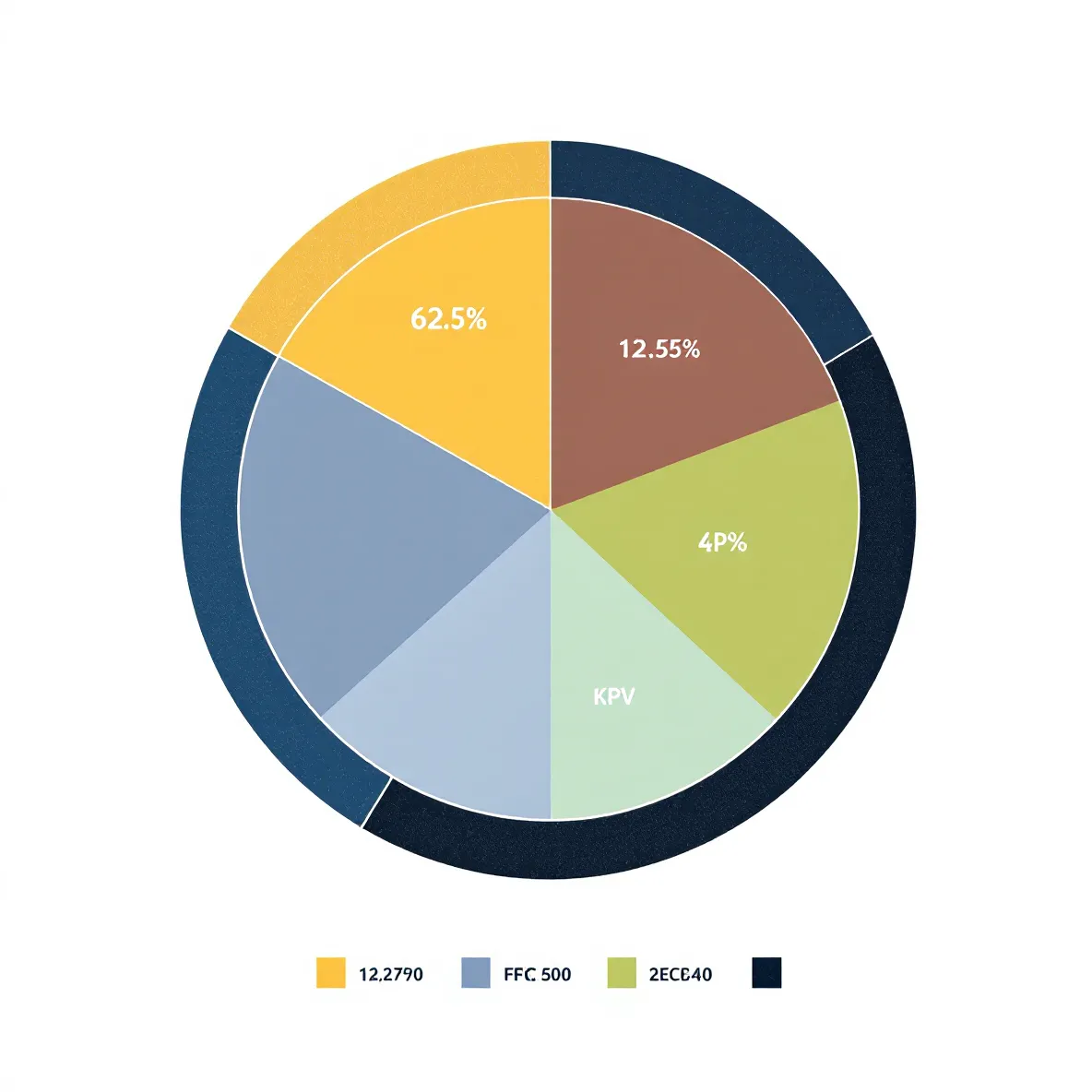
The most-cited KLOW research-vial composition across compounders is 80 mg total: GHK-Cu at 50 mg (62.5% by mass), BPC-157 at 10 mg, TB-500 at 10 mg, and KPV at 10 mg [1]. The peptides are co-dissolved at fixed mass ratios in the lyophilized vial; they do not form a single chemical complex. Vendor reconstitution guidance varies — bacteriostatic water or sterile water are typical — and validated stability data after reconstitution is not consistently published.
There is no FDA-approved or pharmacopeial KLOW combination product. The 80 mg vial is a marketplace convention, not a regulatory specification. Compounder-to-compounder variability in mass-ratio accuracy, purity, endotoxin load, and component identity is the rule rather than the exception, and certificates of analysis frequently omit mass-spectrometric verification, endotoxin LAL testing, and amino-acid analysis.
BPC-157 — research doses and routes
The Krivic 2006 Achilles tendon-to-bone healing study in male Wistar rats administered BPC-157 at 10 microgram/kg or 10 nanogram/kg by intraperitoneal injection, daily, for 14 days [12]. The Sikiric 1997 nitric oxide and blood pressure work used the same 10 microgram/kg or 10 nanogram/kg intraperitoneal range alongside L-NAME at 5 mg/kg and L-arginine at 100 mg/kg [15]. Oral administration in drinking water at 0.16 microgram/mL has also been used in rodent ligament-healing studies.
The Hsieh 2017 HUVEC angiogenesis study worked at nanomolar to micromolar BPC-157 concentrations in cell culture and applied matching concentrations to the chick chorioallantoic membrane in vivo [6]. The GLP-compliant preclinical safety evaluation in rats, dogs, rabbits, and guinea pigs covered single- and repeated-dose intramuscular and intravenous administration; the abstract reports no minimum toxic dose and no lethal dose at the tested ranges [24].
The Lee 2021 retrospective human case series used intra-articular knee injection of BPC-157 alone or with thymosin beta-4; doses were not standardized across patients and the study had no placebo control [2]. The 2025 narrative review highlights a plasma half-life reported under 30 minutes as a clinician-relevant gating fact [7].
GHK-Cu — research doses and routes
Cell-culture transcriptomic and lung-fibroblast studies worked at 1-10 nM GHK-Cu in cultured human dermal fibroblasts and COPD lung fibroblasts [5][13]. The Mao 2025 murine DSS-colitis study administered oral gavage GHK-Cu at 20 mg/kg daily for 14 days [22]. The Pyo 2007 hair-follicle work used subcutaneous GHK-Cu injection in rats and nanomolar concentrations in cultured dermal papilla cells [23].
The Pickart 2015 IRB-approved cosmetic-dermatology trials used topical GHK-Cu cream twice daily for 12 weeks in 71 women and daily for 3 months in the 21-woman histology cohort [10]. These are topical cosmetic doses — not systemic injectable doses, and they do not extrapolate to internal use.
GHK and KPV are subject to rapid plasma aminopeptidase degradation in unmodified form. Targeted delivery systems — copper-binding for GHK-Cu, PepT1-targeted nanoparticles for KPV, hyaluronic-acid nanocarriers — extend functional tissue exposure in published delivery studies.
TB-500 / native Tbeta4 — research doses and routes
The molecular-mismatch caveat from /research applies to every dose figure in this section. The Sosne 2022 RGN-259 Phase III neurotrophic-keratopathy trial used 0.1% native Tbeta4 ophthalmic solution, topically, six times daily [9]. The Morris 2010 rat embolic-stroke study used native Tbeta4 at 6 mg/kg intraperitoneal every 3 days, starting 24 hours after stroke [25]. The Malinda 1999 dermal-wound study applied native Tbeta4 at 5 microgram in 50 microliter PBS, topically and intraperitoneally [26], and is the paradigm in which fragment-level TB-500 activity is best characterized.
Native Tbeta4 in unmodified form circulates with a half-life of approximately 2 hours in humans by ELISA. The TB-500 fragment is N-acetylated to block aminopeptidase cleavage of the N-terminal lysine and improve in vitro stability; pharmacokinetic data on the acetylated fragment in vivo is sparse.
Where a 'TB-500' dose appears in vendor literature, that number rarely corresponds to a published peer-reviewed dose. The Sosne 0.1% topical ophthalmic concentration, the Morris 6 mg/kg IP figure, and the Malinda 5 microgram topical figure are the canonical published reference points — all for native Tbeta4, not the fragment.
KPV — research doses and routes
The Dalmasso 2008 colitis study used KPV at 10 nM in cell culture (intestinal epithelial and T-cell lines) and 100 micromolar in drinking water in mice [3]. The Schaible 2013 mouse traumatic-brain-injury study used a single intraperitoneal 1 mg/kg dose, 30 minutes after controlled cortical impact [19]. The 2025 HaCaT keratinocyte PM10 study used 50 microgram/mL in cell culture [20]. The 2017 ex-vivo human-skin transdermal iontophoretic pilot used a current density of 0.5 mA/cm^2 across microporated stratum corneum [11].
The Xiao 2017 hyaluronic-acid-functionalized polymeric-nanoparticle formulation and the 2024 PepT1-targeted KPV/FK506 co-assembly formulation are the strongest preclinical delivery signals; both target inflamed mucosa via PepT1 [17][18]. KPV's Km at PepT1 is approximately 160 micromolar [3].
Half-life and stability summary
BPC-157 — plasma half-life reported under 30 minutes [7]. Originally characterized as the 'stable gastric pentadecapeptide' on the basis of stability in human gastric juice, which supports oral-route work in rodents but does not extend the plasma half-life.
Native thymosin beta-4 — circulating half-life approximately 2 hours in humans by ELISA. The TB-500 fragment is N-acetylated to improve in-vitro stability; in-vivo plasma data on the fragment is sparse.
GHK-Cu and KPV — short reported in-vivo half-lives in unmodified plasma form due to rapid aminopeptidase cleavage. Targeted delivery systems extend functional tissue exposure, and KPV's PepT1-mediated uptake provides selective accumulation in inflamed epithelium and macrophages.
The half-life mismatch is the most clinically relevant pharmacokinetic asymmetry in the four-peptide KLOW blend. A single co-administered dose exposes the four mechanisms on very different timescales — relevant context for any attempt to interpret rodent multi-dose protocols as equivalent to a single human research-dose administration.